
PTE Re-tell Lecture template
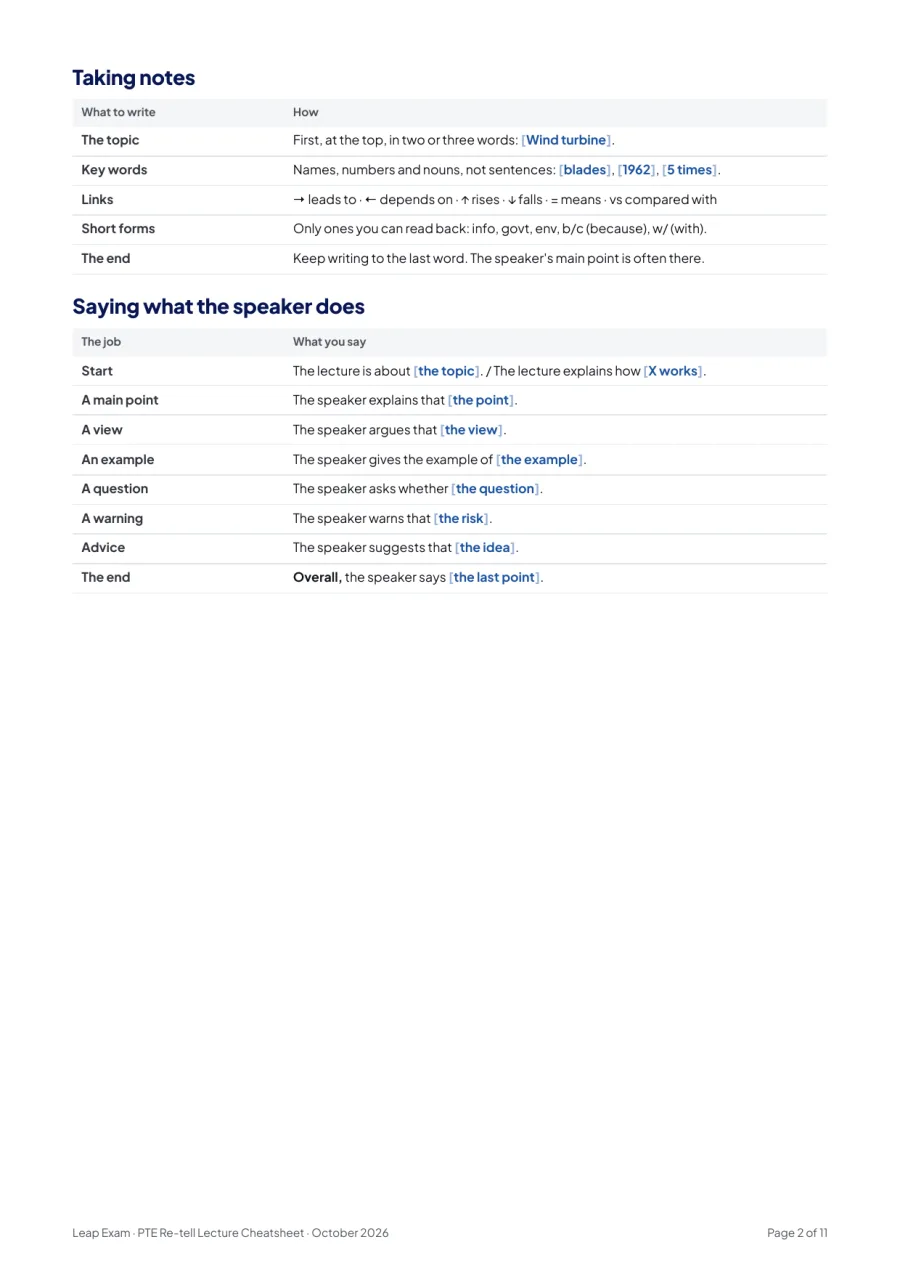
A sentence plan for each of the 8 kinds of lecture, with how to take notes while the speaker talks.

By Thanh Tran, PTE and IELTS coach
Updated

Which lecture is it?
The cheat sheet has a page for each of the 8 kinds of lecture. Find yours here, then turn to its page.
- Page 4
How something works
A machine or a natural process, step by step
- Page 5
Causes and effects
Why something happens, and what it leads to
- Page 6
A problem and a fix
Something going wrong, and a way to put it right
- Page 7
A comparison
Two things side by side: how they are alike and how they differ
- Page 8
A history
Dates, names and events in order
- Page 9
A claim tested
A belief or a story, then a question: is it true?
- Page 10
A term explained
A word or an idea: what it means, with examples
- Page 11
A study and what it found
Researchers, an experiment, and what they found
How to use it
While you listen, write the topic first. Then four or five key words, with arrows to show how they link.
Find the kind of lecture in the table below. Pick one option for each sentence while you prepare.
Fill every blue gap from your notes. If you can't, pick another option.
Say only what the speaker said. Join the ideas with words like because, so and but.
Every sentence must need this lecture. A line that fits any lecture scores 0, and then nothing else is marked.
Speak for close to 40 seconds. If you stop for 3 seconds, the recording ends.
The how something works template
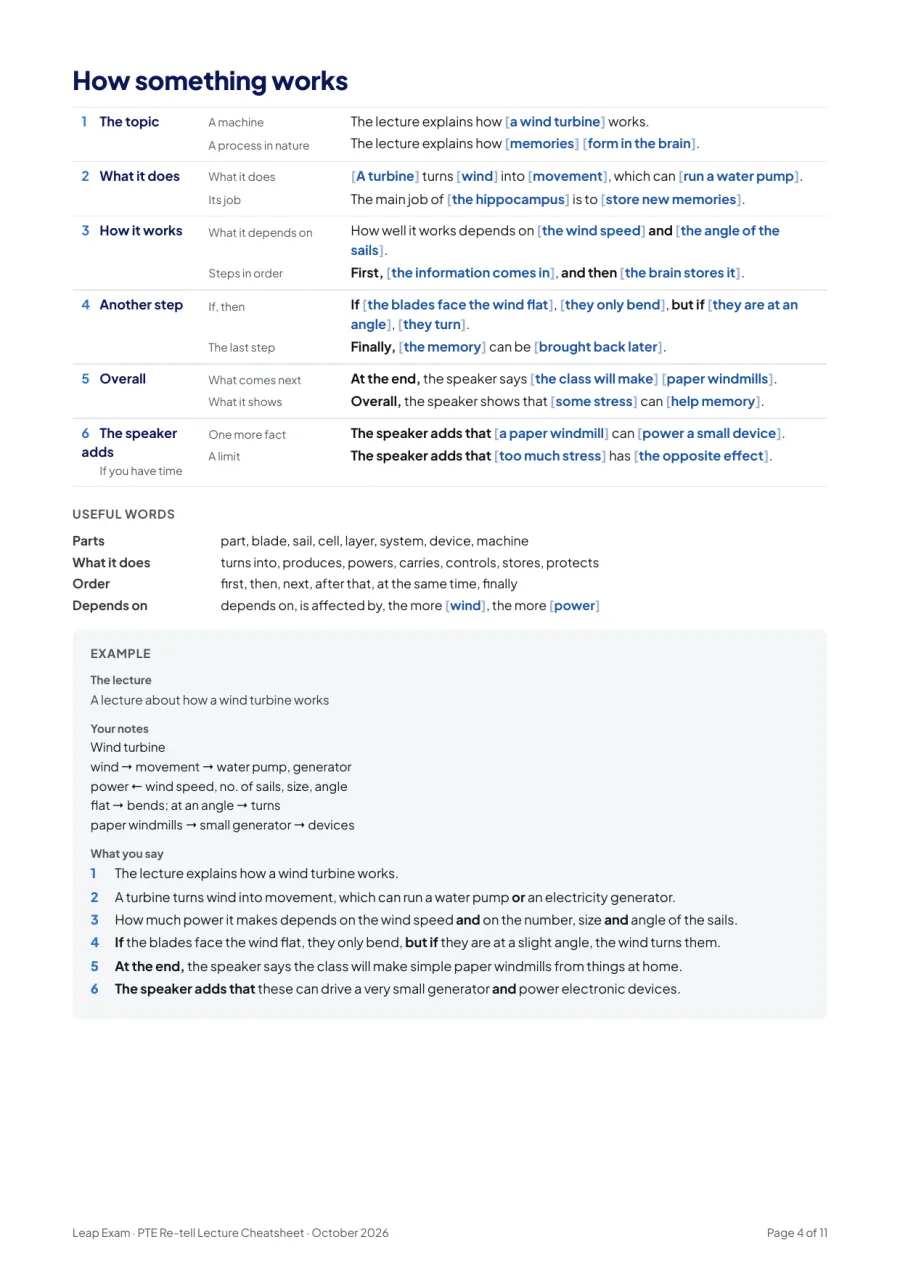
Page 4 of the cheat sheet, as it prints. Pick one option for each sentence and fill the blue gaps.
Blue: take it from your notes.Bold: a linking phrase.
- The topic
- A machineThe lecture explains how a wind turbine works.
- A process in natureThe lecture explains how memories form in the brain.
- What it does
- What it doesA turbine turns wind into movement, which can run a water pump.
- Its jobThe main job of the hippocampus is to store new memories.
- How it works
- What it depends onHow well it works depends on the wind speed and the angle of the sails.
- Steps in orderFirst, the information comes in, and then the brain stores it.
- Another step
- If, thenIf the blades face the wind flat, they only bend, but if they are at an angle, they turn.
- The last stepFinally, the memory can be brought back later.
- Overall
- What comes nextAt the end, the speaker says the class will make paper windmills.
- What it showsOverall, the speaker shows that some stress can help memory.
- The speaker addsIf you have time
- One more factThe speaker adds that a paper windmill can power a small device.
- A limitThe speaker adds that too much stress has the opposite effect.
- The lecture explains how a wind turbine works.
- A turbine turns wind into movement, which can run a water pump or an electricity generator.
- How much power it makes depends on the wind speed and on the number, size and angle of the sails.
- If the blades face the wind flat, they only bend, but if they are at a slight angle, the wind turns them.
- At the end, the speaker says the class will make simple paper windmills from things at home.
- The speaker adds that these can drive a very small generator and power electronic devices.
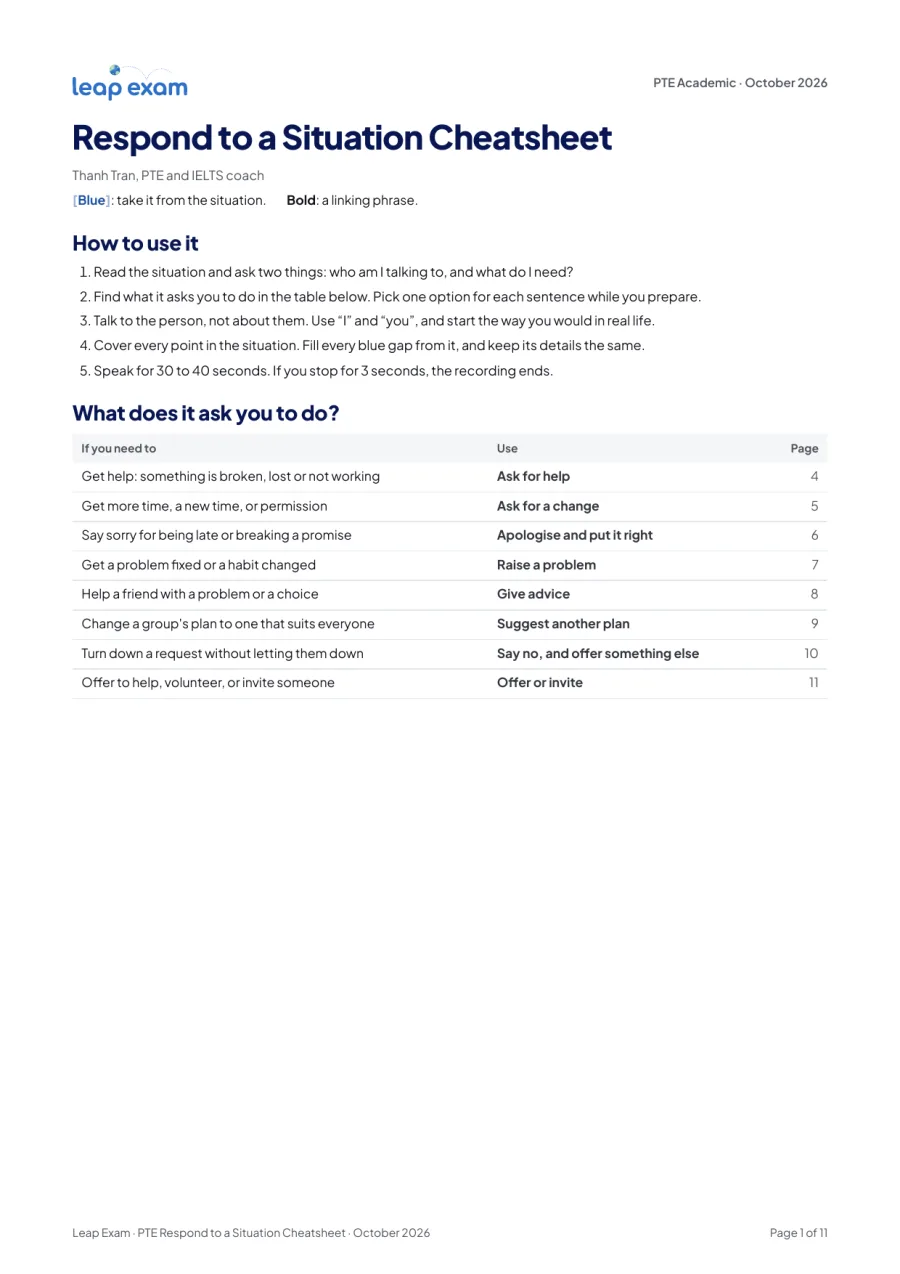
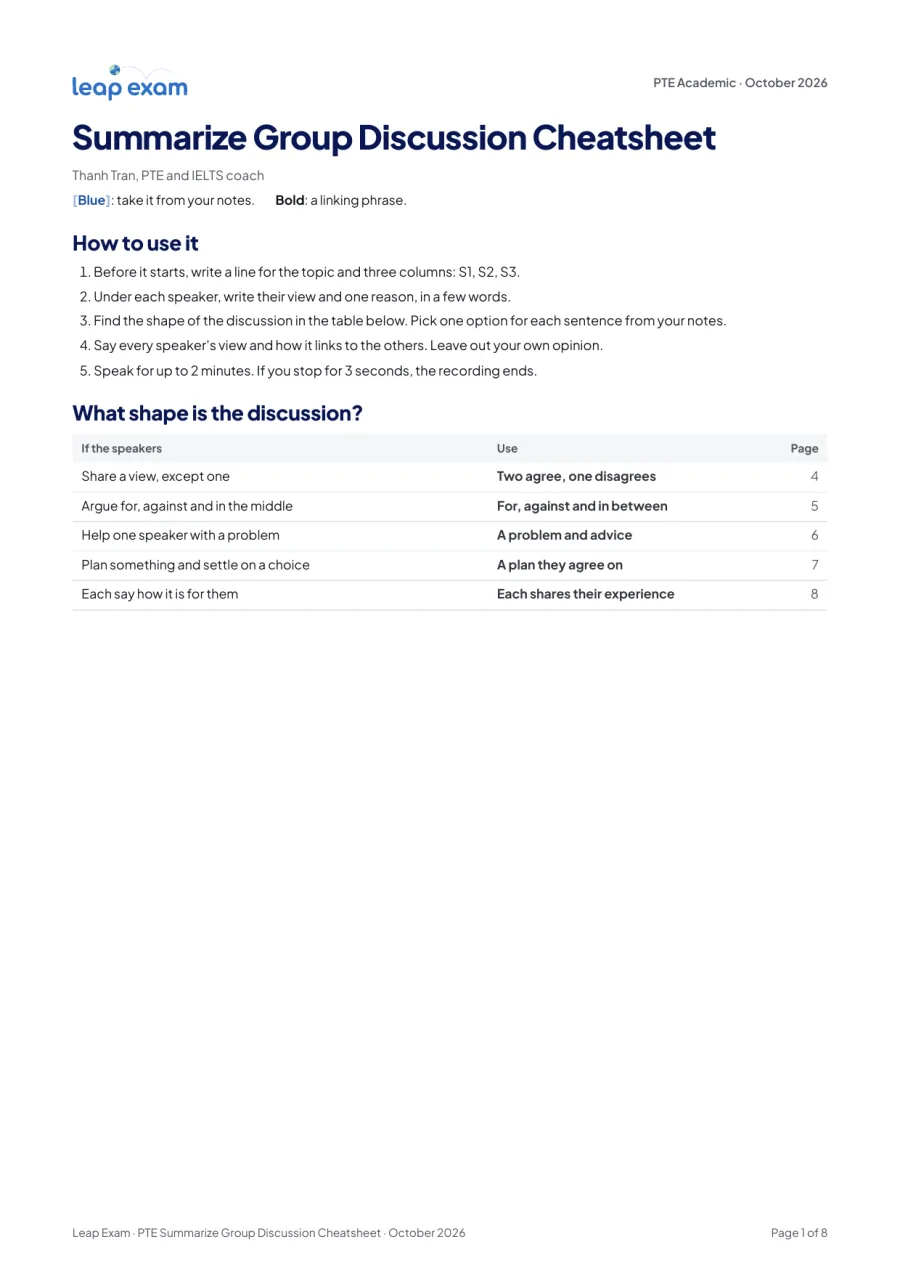
Practise Re-tell Lecture for freeAre templates allowed in PTE?

Common questions
Are templates allowed in PTE Re-tell Lecture?
What should I write while I listen?
What if I missed part of the lecture?
How long should I speak in Re-tell Lecture?
Is the PDF free?
Get the free Re-tell Lecture template